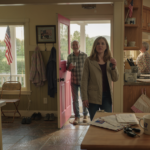
My mom leaned over, looked at my daughter, and whispered, “We don’t sit with mistakes.”
The table laughed.
My daughter looked down.
I just grabbed her hand and walked out.
That night, Dad texted, “You’re still covering the car payment tomorrow, right?”
I replied, “Not for people who humiliate my kid.”
By noon the next day, they were freaking out.
I told them not to ruin it over and over again.
It was my birthday, and I didn’t want anything fancy.
No drama.
No passive-aggressive comments.
No tight-lipped smiles.
I just wanted one peaceful night with the people I loved, especially my daughter.
I even reminded them the day before.
Please, just be decent to her.
Not warm.
Not affectionate.
Not even friendly.
Just decent.
That was all I asked.
My mom said I was being dramatic.
My dad didn’t answer.
They’ve always had a strange relationship with my daughter, Ava.
She’s 13.
Sharp.
A little introverted.
The kind of girl who notices everything and says very little.
And unfortunately for her, she was born into a family that values fake smiles and polite silence over honesty.
She doesn’t fit their mold.
And I guess they never forgave her for that.
Things had been getting worse for a while.
A jab about her weight here.
A joke about her attitude there.
Always quiet enough to deny.
Never loud enough to confront.
At holidays, they’d forget her favorite foods.
At birthdays, they’d give her passive-aggressive gifts like a self-help book for teen girls with big feelings.
Once my mom told her not to wear yellow because not every color flatters everyone, sweetie.
I said something then.
Got told I was too sensitive.
Still, I invited them to my birthday dinner.
Habit, maybe.
Or hope.
Or because after all these years, I still thought maybe they’d surprise me.
That maybe if I begged hard enough, warned them clearly enough, they’d act like normal loving grandparents for one damn night.
We booked a restaurant.
Nothing extravagant.
Just a quiet little Italian place Ava liked because of the string lights and big windows.
I told her she could pick the venue.
She smiled.
She even wore the blouse my mom gave her last Christmas.
I hadn’t seen her wear it before.
Maybe she thought it would help.
Everyone arrived on time.
My husband.
A few close friends.
Some cousins.
The vibe was light.
My mom showed up in a dress she wore to every occasion like it was her personal uniform for being seen.
My dad looked bored within five minutes, already half scrolling through his phone.
But Ava sat beside me, quiet, polite, trying.
For a while, it felt normal.
We ordered.
Laughed.
Even joked around.
I started to relax.
Maybe I’d been too tense.
Too defensive.
Maybe this time really would be different.
Then dessert came.
Tisu, AA’s favorite.
Someone made a joke about parenting.
I don’t even remember what it was.
And Ava, in that matter-of-fact teen voice, said, “I don’t think I want kids when I grow up.”
It wasn’t rude.
Just honest.
And honestly, not that deep.
People chuckled.
Even I smiled.
But my mom turned her head sharply and locked eyes with Ava.
She leaned in slowly across the table and whispered something I couldn’t quite hear.
I saw Ava blink, then lower her head.
Her fingers tightened around her spoon.
I leaned in and asked what was said.
My mom just shrugged, sipped her wine, and said loud enough for everyone to hear:
“I told her, ‘We don’t sit with mistakes.’”
The table went quiet.
Then, unbelievably, someone laughed.
One of my cousins, I think.
Nervous.
Or clueless.
I don’t know.
But Ava didn’t move.
She stared at her lap like she was trying to disappear into it.
I didn’t say a word.
I stood up, took her hand, and walked out.
No yelling.
No big scene.
Just silence.
And every single head at that table watching us leave.
We didn’t even take the cake.
That night, my phone blew up.
Apologies from friends.
Messages from relatives.
One cousin texted, “I can’t believe she said that.”
Another wrote, “Ava didn’t deserve that. I’m sorry.”
But my mom?
Nothing.
My dad?
Nothing until 10:12 p.m.
“You’re still covering the car payment tomorrow, right?”
That was it.
No mention of what happened.
No mention of Ava.
I stared at it for a full minute, then typed back.
“Not for people who humiliate my kid.”
No reply.
The next morning, I had seven missed calls from my dad, two from my mom.
By noon, they were calling my husband, my sister, even my job.
Suddenly, it wasn’t about Ava.
It was about panic.
And I started to see things clearly for the first time.
All these years, I thought I was keeping the peace.
I thought I was balancing two worlds.
Protecting Ava while staying loyal to the people who raised me.
But they weren’t really my family anymore.
And they had never truly accepted her.
That day, everything changed.
They just didn’t know it yet.
The first thing I learned after cutting them off financially was how fast panic shows up when entitlement loses its cushion.
They didn’t call to ask how Ava was doing.
They didn’t ask if she was okay after that night.
They didn’t even pretend to care.
The calls were about logistics.
Confusion.
Urgency.
My dad left a voicemail saying there must have been some mistake with the payment.
My mom followed with a text about how the bank doesn’t like delays and how stressful it was for them.
Nothing about the words that broke my kid.
They’ve never liked the word no.
Not because they’re loud or aggressive.
They’re worse than that.
They guilt.
They remind you of sacrifices you never asked for.
Growing up, every disagreement ended the same way, with me apologizing just to keep things calm.
I didn’t even realize I was trained that way until I stopped.
The car payment wasn’t a small thing.
I’d been covering it for almost a year.
It started as just until things stabilize, which somehow turned into an expectation.
Same with the insurance.
Same with the shared account I helped manage because my mom kept locking herself out and refusing to learn.
They like saying we were a team.
Family helps family.
What they really meant was I help and they receive.
So when I didn’t respond, the tone shifted.
My dad started calling my husband.
Twice in one day.
My mom messaged my sister, who called me confused and uncomfortable.
Then they went wider.
A friend of mine sent me a screenshot of a message my mom had sent her, asking if I was going through something and suggesting Ava was too sensitive lately.
Too sensitive.
That was their diagnosis.
Not cruel.
Not inappropriate.
Not humiliating.
Just sensitive.
I didn’t defend myself.
I didn’t correct the story.
For the first time in my life, I let them sit with the narrative they created.
Instead, I started undoing things.
I removed my name from their accounts.
Changed passwords.
Canceled the shared calendar that held their appointments.
I stopped refilling the gas card I’d given my dad because he hated dealing with apps.
I didn’t announce any of it.
It stopped.
They noticed fast.
My dad left another voicemail, his voice tight, saying he didn’t understand why I was punishing them over one comment.
One comment.
As if it hadn’t been years of little moments stacked on top of each other.
As if Ava hadn’t come home from their house before asking me what she did wrong.
As if I hadn’t spent nights reassuring her that adults aren’t always kind, even when they’re supposed to be.
The part that hurt the most was how easily they dismissed her.
They never said her name.
Not once.
She was always the girl.
Or your daughter.
Or the kid.
Like distancing language made it cleaner.
Like it erased responsibility.
I didn’t call back.
While they spiraled, Ava got quieter.
Not sad.
Observant.
She asked me if Grandma was mad at her.
I told her the truth.
I said, “Some people don’t like being held accountable, and that has nothing to do with you.”
That was the moment I realized I was done explaining.
I’d spent years translating my parents to my child, softening them, making excuses so she wouldn’t feel unwanted.
And I’d spent years translating my child to my parents, hoping one day they’d listen.
They never did.
And now that the money was gone, the silence felt louder than any argument we’d ever had.
By the end of the week, they weren’t just calling.
They were begging.
And I still didn’t answer.
By day 10, the silence had become too loud for them.
They tried to hold their ground at first.
Act casual.
Like I just overreacted and would come around after cooling off.
But when the car payment didn’t show up, when the groceries didn’t appear in the fridge, when the shared account went dead and I didn’t respond to their passive-aggressive guilt texts, they cracked.
The first real shift came in a text from my dad.
Two sentences.
No punctuation.
We understand you’re busy and stressed.
We don’t want to add to it.
Translation:
Why aren’t you answering?
My mom followed with one of her long emotional essays.
It started with, “I’ve been thinking about what happened,” and spiraled into a full play-by-play of how maybe her comment came out wrong and that humor doesn’t always land the way it’s meant to.
She even tried to loop in her age.
How she was from a different time.
No apology.
No accountability.
Just soft excuses and vague regret.
She ended with, “We just want things to go back to normal.”
Normal.
As if normal was me constantly managing the damage they caused while smiling through it.
I didn’t reply.
That weekend, I took Ava out.
Just us.
We drove an hour to this used bookstore she loved, the one with mismatched furniture and a sleepy cat in the window.
I let her pick out whatever she wanted.
We sat in a quiet cafe afterward, her legs curled under her in the booth as she read the first chapter of a fantasy book she’d been waiting months to get.
She looked up at one point and asked, “Are Grandma and Grandpa mad?”
I didn’t answer right away.
She kept going.
“I’m not sorry for what I said at dinner. I wasn’t trying to be rude. I just said how I felt.”
I told her I knew.
And I told her she didn’t need to apologize for being honest.
She asked me one more question before we left.
“Do I have to see them again?”
That one was harder.
I told her not unless they change.
She just nodded like she’d already known the answer, but needed to hear it from me.
When we got home, I saw I had three missed calls and two voicemails.
One was from my dad.
Short.
Panicked.
Something about the bank calling, about needing to sort out insurance and late fees.
He said they were about to lose the car and everything’s falling apart over nothing.
Over nothing.
The second voicemail was my mom crying.
Full meltdown.
She mentioned my dad’s blood pressure.
How he wasn’t sleeping.
How they couldn’t believe I was doing this to them.
Still nothing about Ava.
Not one word.
And that’s when I knew they weren’t really upset about what they did.
They were just upset it had consequences.
They missed access.
Control.
The quiet luxury of knowing I’d always come in at the last minute to clean up after them, to pay the bill, fix the problem, smooth over the awkwardness with my daughter, and pretend we were still a family.
That was gone now.
And they were scrambling.
They tried other angles after that.
My sister called and said they were really not doing well.
One of my cousins reached out to check on me and casually mentioned how hard this must be for my mom.
My mom.
Who humiliated my daughter in public.
Laughed.
And then doubled down.
Everyone kept acting like the situation was complex.
It wasn’t.
A grown woman looked a 13-year-old girl in the eye and told her, in front of a room full of people, that she was a mistake.
That’s not something you fix with a remember this photo from 1997.
I didn’t respond to any of them.
I kept quiet.
I stayed focused on Ava.
I started rethinking everything.
Holidays.
Traditions.
Shared obligations.
I looked around and saw how much of my adult life was structured around people who hadn’t earned that space.
I hadn’t gone no contact.
Not yet.
But the walls were going up.
And for once, I wasn’t looking for the door back in.
I was checking the locks.
Week three was when they stopped playing nice.
Until then, everything had been low-level manipulation.
Voicemails dripping with guilt.
Texts pretending to be concerned.
Pictures from the past sent like spells to soften me.
But the money wasn’t coming back.
And I wasn’t budging.
That’s when it all changed.
It was a Tuesday afternoon.
Raining.
Ava was at school, and I was trying to finish work when I heard the pounding on the front door.
Not a knock.
A full-handed, impatient pounding.
I froze.
Peeked through the window.
It was my dad.
He’d shown up.
I didn’t open the door.
I didn’t say a word.
He stood there for a while, shifting from foot to foot, mumbling to himself, then louder:
“Kelly, come on. This is ridiculous. Let’s talk.”
I stayed out of sight.
Eventually, he shoved something into the mailbox and left.
It was a folder full of loan documents.
Printouts of their car payments.
Overdue notices.
Scribbled math on napkins showing how far behind they were.
At the bottom, a yellow sticky note.
This is all over one stupid comment.
No apology.
No understanding.
Just desperation dressed as confusion.
I didn’t respond.
Two days later, I found out they’d done something worse.
They called Ava.
They used my mom’s old cell.
A number I forgot Ava still had in her phone.
I didn’t even know about the call until Ava knocked on my bedroom door that evening.
She looked weirdly calm.
“Grandma called me,” she said.
I stared at her.
“What did she say?”
“She said she missed me. Then she said families forgive each other and that she didn’t mean to hurt my feelings. Then she asked if I wanted to come over next weekend.”
I felt sick.
Like something unspoken had just snapped.
“Did you say yes?”
Ava shook her head.
“I said I had homework.”
She’d blocked the number afterward on her own.
But I couldn’t let it go.
They hadn’t just crossed a line.
They’d gone around me.
They knew they couldn’t get through to me, so they reached for the one person they thought might still listen.
A child.
Their own granddaughter.
The next morning, I got a message from my mom.
Even Ava talked.
She’s clearly not as upset as you think.
Maybe it’s time you stopped projecting your issues onto her.
And that’s when I saw it clearly.
This wasn’t a misunderstanding.
It never had been.
It was control.
It was them rewriting the story so they could stay the victims and Ava and I were just roles they recast whenever it suited them.
They thought if they got Ava on their side, I’d fold.
Instead, it flipped a switch in me I didn’t even know was there.
That night, I pulled everything apart.
I cut every last financial tie.
I closed the old shared checking account they’d once used just in case.
I canceled the gas card they still used weekly.
I locked them out of the pharmacy portal I managed for my mom’s prescriptions.
I changed the locks.
I removed the spare key from under the fake rock in the garden.
Then I told Ava the truth.
I said they’d been calling, texting, trying to get to me.
And now they tried to go through her.
I told her she had the right to set her own boundaries.
That she didn’t owe them forgiveness or access just because they were related.
She listened.
And then she said something I hadn’t expected.
“I used to feel bad for them, but I don’t anymore.”
And then she told me something else.
Something I hadn’t heard before.
Last year when she stayed over at their house for a weekend, my mom told her not to eat too much bread at dinner because it’s harder to lose baby weight when you’re short.
She was 12.
She never told me.
She thought it would just start a fight.
She was probably right.
I sat there holding that story, realizing I’d been afraid of rocking the boat while my daughter had been quietly drowning.
The next morning, I sent one final message.
Group text.
Both of them.
If you want to be in Ava’s life, you talk to me.
You apologize to her.
Not a vague excuse.
A real apology.
You explain yourself.
And you mean it.
Otherwise, don’t contact either of us again.
Two days passed.
Then a response came from my mom.
We’re not going to be manipulated into something we didn’t do.
We love Ava, but we won’t grovel just because you’re emotional.
That was it.
No apology.
No ownership.
No intention to change.
Just confirmation of everything I already knew.
They didn’t love her.
Not really.
They loved the version of her they could control.
And when that didn’t work, they turned on both of us.
That was the last message they ever sent.
After that last message, the one where my mom called me emotional and said they wouldn’t grovel, something snapped into place.
Not in an angry way.
In a final way.
The part of me that had still been clinging to the idea that they might come around died right there.
And I let it.
I thought they’d lash out or show up again or call screaming, but they didn’t.
What came next was worse, in a way.
The silence from them.
Everyone else was loud.
The cousins who hadn’t texted me in a year suddenly popped up.
Casual little messages that started with, “Hey, just checking in,” and quickly turned into, “So I heard there was some kind of falling out.”
My aunt sent me a chain of voice messages about how every family has its moments and people say things they don’t mean.
My mom’s best friend even emailed me.
Emailed.
She said she’d heard from my mom that I was going through a phase and that mothers and daughters always find their way back to each other.
Not one of them asked how Ava was.
Not one of them asked what was actually said.
They all acted like it was just a misunderstanding.
Like I’d taken something small and blown it up.
Like there weren’t years behind it.
Like there wasn’t a little girl who had been made to feel like an outsider in her own family since she could walk.
But the worst one came from my sister.
She texted me, “They’re not perfect, but they’re still our parents. Maybe just talk to them for AA’s sake. For AA’s sake.”
That was the moment I realized how warped this whole thing had become.
People were so focused on them.
Their image of my parents.
Their need to keep the family holiday spinning.
That they completely skipped over what this had done to Ava.
Like she was just part of the collateral.
She wasn’t.
She was the center of it.
And something strange happened in the middle of all this chaos.
Ava started changing.
It wasn’t sudden.
It was quiet.
Slow.
Like something inside her was loosening.
She came out of her room more.
Started giving real answers to questions instead of shoulder shrugs.
She started leaving her sketchbook out in the open instead of hiding it under her bed.
And one afternoon while I was cleaning up, I found a drawing she left on the kitchen table.
It was us.
Me and her.
Sitting on a park bench sharing a slice of cake, laughing.
In the background, there was a table full of people with no faces.
One of them had a speech bubble that said, “We don’t sit with mistakes.”
But we weren’t at that table.
We were facing the other way.
She’d drawn herself walking away from it.
She hadn’t just accepted what happened.
She was rewriting it.
That same week, I heard from a friend of mine who works at a pharmacy where my parents used to pick up prescriptions.
Apparently, my mom came in asking for help refilling something, but couldn’t get access to her account.
“My daughter used to handle it,” she said. “She’s taking some space.”
That was how she explained it.
Like I’d gone on a retreat.
Like I’d be back soon.
Then another surprise came.
I got a call from a local charity I used to volunteer with.
They said my mom had reached out asking if I still did bookkeeping for donations.
She told them I was just overwhelmed lately, but she tried to get me involved again.
Like nothing had happened.
Like if they could keep saying my name in the right rooms, maybe they could still control the story.
They were losing control.
And they didn’t know what to do with that.
Meanwhile, Ava was just blooming.
No other word for it.
The more distance we had from my parents, the more she came into herself.
She joined the art club at school.
Started baking.
She started laughing with her whole face again.
But there was one thing still sitting between us.
She never asked if they were going to apologize.
She never asked if we’d go back.
She just kept waiting.
So I decided to try one last thing.
I wasn’t doing it for my parents.
I wasn’t doing it out of guilt.
I was doing it because I wanted to give Ava the closure she deserved.
Not just an ending.
But a clear choice.
I sent a message.
One sentence.
Ava is willing to meet with you once, if you’re ready to have a real conversation and apologize face to face.
It was a simple test.
Nothing dramatic.
No begging.
No second chances.
Just a door barely open.
They responded two days later.
It was exactly what I expected.
We’ll think about it, but only if you’re not going to make a scene.
That was all I needed to see.
They weren’t interested in rebuilding anything.
They wanted to save face.
And now I was finally ready to stop pretending they ever wanted more than that.
That was it for me.
That message—We’ll think about it, but only if you’re not going to make a scene—sealed everything.
Even when offered a second chance.
Even when they had a clear path to redemption.
They still couldn’t take accountability.
They didn’t even ask when or where.
They weren’t concerned about seeing Ava.
They were only worried about how they’d look.
They always were.
So I never replied.
I didn’t ask again.
I didn’t explain or clarify.
I deleted the message and moved on.
And that’s when the real silence began.
Not awkward silence.
Not angry silence.
Real permanent silence.
I stopped wondering what they were thinking.
I stopped replaying that night.
I stopped hoping for a moment that would undo everything.
It wouldn’t come.
Never could.
Because they weren’t sorry.
They weren’t capable of the kind of love Ava deserved.
I made it official a week later.
I blocked their numbers.
Removed them from emergency contacts.
Told my daughter’s school they were no longer authorized for pickups or meetings.
I went through every document, account, and form and erased them from all of it.
No more photos on the fridge.
No more saved addresses.
I even changed the password to the old Netflix account they still had access to.
It felt cold, in a way.
But it also felt clean.
That Sunday, I sat Ava down.
I told her the truth.
That I’d offered them one last chance.
And they didn’t take it.
I told her she wouldn’t be seeing them again.
Not because she wasn’t wanted.
But because she deserved better.
She listened.
Quiet.
Steady.
When I finished, she didn’t ask any questions.
She just nodded and said, “Okay.”
I asked if she was sad.
She said, “A little, but not the kind that stays.”
That sentence stayed with me.
It still does.
Because for so long, I thought this kind of break would leave a hole.
That cutting ties with the people who raised me would fracture something permanent.
Maybe it did.
But what came in its place wasn’t pain.
It was peace.
Thanksgiving came and went.
Just the three of us.
We made stuffing from a box and Ava burned the rolls and my husband spilled cider on the couch.
It was imperfect and messy and full of laughter.
There were no hush tones or forced smiles.
No one felt like they were walking on a tight rope.
It was our own.
Later that night, Ava pulled out the sketchbook again.
She’d added something new.
It was a drawing of a big open window and three people sitting at a table beside it.
Below it, one line in block letters.
We don’t sit with mistakes.
We make space for each other.
I didn’t cry.
Not then.
I just hugged her and I let that line settle into the part of me that used to think loyalty meant sacrifice.
Now I know better.
Loyalty is showing up for the people who show up for you.
It’s love that doesn’t cost your dignity or your child’s self-worth.
It’s not a burden you carry out of guilt.
It’s a choice.
I chose Ava.
And I’d do it again a thousand times.
We don’t sit with mistakes.
News
My Niece Sent Me Her Christmas List. ‘A MacBook Pro, A Designer Bag, And $1,000 Cash.’ I Replied…
My niece sent me her Christmas list: a MacBook Pro, a designer bag, and $1,000 cash. I replied, “You’ll be…
I Came In Through The Side Door To My Parents’ House And Heard My Uncle Say, ‘She’s Just Here To…
I came in through the side door to my parents’ house and heard my uncle say she’s just here to…

At The Airport, I Was Told My Ticket Was CANCELED. My Family Boarded Without Even Looking Back…
At the airport, I was told my ticket was cancelled. My family boarded without even looking back. That night, my…

A Day Before The Wedding, $15K Vanished From My Account. I Called My Brother. He Said, ‘Come On.
A day before the wedding, $15,000 vanished from my account. I called my brother. She said, “Come on, it’s not…
On My Daughter’s 10th Birthday, I Found Out The Whole Family Flew To Miami — Without Saying A Word.
On my daughter’s 10th birthday, I found out the whole family flew to Miami without saying a word. I commented,…

MY HUSBAND SECRETLY DIVORCED ME MONTHS AGO BUT KEPT SLEEPING IN MY BED TO HIDE HIS DEBT. THEN I …
My husband secretly divorced me months ago, but kept sleeping in my bed to hide his debt. Then I won…
End of content
No more pages to load